![Carte Blanche [Skateboarding]](https://storage.ghost.io/c/e8/66/e866238d-c304-4142-8930-e488e4890869/content/images/2026/08/Carte-Blanche---Skateboar-4.png)
Not Lost in 翻訳
Japanese skateboarding is often described in a simple shorthand: an American culture imported and reproduced. Pretty much like in every other country around the globe. There is some truth in the first part. Skateboarding arrived in Japan carrying familiar source material: California imagery, American brands, skate videos and magazines, punk and hip-hop, and the independent skate shop.
Reproduction might not be completely accurate, though. Translation might be closer.
日本のスケートボード文化は、しばしば単純な言葉で語られる。アメリカの文化が輸入され、そのまま再現されたものだ、と。世界中のほかの国々と同じように。
確かに、そこには一理ある。スケートボードは、カリフォルニアのイメージ、アメリカのブランド、スケートビデオや雑誌、パンクやヒップホップ、そしてインディペンデントなスケートショップという、おなじみの文化とともに日本にやってきた。
ただ、その後に起きたことを「再現」と呼ぶのは、少し違うのかもしれない。「翻訳」のほうが近いのではないだろうか。
Translation involves taking what you know from the original, studying its mechanisms and principles, and rebuilding a version legible to you and your peers. It begins with the original and then ventures somewhere else. Something moves from one language into another and, if the translation is any good, retains enough of its source to remain recognizable while becoming something that could only exist in its new language.
Japanese skateboarding did something similar. The American references are there. San Francisco, Los Angeles and New York remained visible. So did the brands, graphics, videos, music and personalities that traveled with them. But once those references entered Tokyo, Osaka and other Japanese cities, they encountered a different physical environment, different restrictions, different aesthetics and, most importantly, different people.
翻訳とは、原文から得た知識をもとに、その仕組みや原理を理解し、自分や仲間たちにとって意味の通じる形に組み立て直すことだ。出発点は原文にある。しかし、そこから別の場所へと進んでいく。ある言語から別の言語へと移されたものは、優れた翻訳であれば、元の姿を認識できるだけの要素を残しながらも、新しい言語の中でしか生まれ得ない何かになる。
日本のスケートボードも、似たような道をたどった。アメリカからの影響は今も見て取れる。サンフランシスコ、ロサンゼルス、ニューヨーク。そこから伝わってきたブランド、グラフィック、映像、音楽、そしてスケーターたちの存在も。しかし、それらが東京や大阪をはじめとする日本の都市に入り込んだとき、異なる都市環境、異なる制約、異なる美意識、そして何よりも異なる人々と出会った。
Nobody sat down and decided to create a specific “Japanese skateboarding” (well, maybe the actual pioneers, but that’s for a future issue). It happened on its own.
Ura-Harajuku offers one particularly visible example. By the 1990s, skateboarding was entering a Tokyo landscape where small boutiques, vintage clothing, record stores, independent labels, music and graphic design were already colliding within a few streets. Skateboarding became part of that exchange.
誰かが机に向かい、「日本独自のスケートボードを作ろう」と決めたわけではない。(もっとも、初期のパイオニアたちはそう考えていたのかもしれない。その話はまた別の号で。)それは自然に生まれていった。
そのわかりやすい例のひとつが、裏原宿だ。1990年代には、小さなブティック、古着屋、レコード店、インディペンデントレーベル、音楽、グラフィックデザインが、東京の限られた街区の中で交わり、影響し合っていた。スケートボードも、その交流の一部になっていった。
Every board on the wall, every brand carried or ignored, every video playing, every magazine lying around, every person spending an afternoon there represented a choice. And at such a distance from skateboarding's American epicenters, those choices carried particular weight. Taken together, those choices formed an argument—sometimes consciously, sometimes not—about what skateboarding was.
壁に並ぶ一本一本のデッキ。取り扱うブランドと、あえて取り扱わないブランド。店内で流れるビデオ。置かれた雑誌。午後をそこで過ごす人々。そのすべてが、何らかの選択の結果だった。
そして、アメリカのスケートボード文化の中心地から遠く離れた場所では、その選択は特別な重みを持っていた。そうした選択の積み重ねが、意識的であれ無意識的であれ、「スケートボードとは何か」というひとつの主張を形づくっていた。
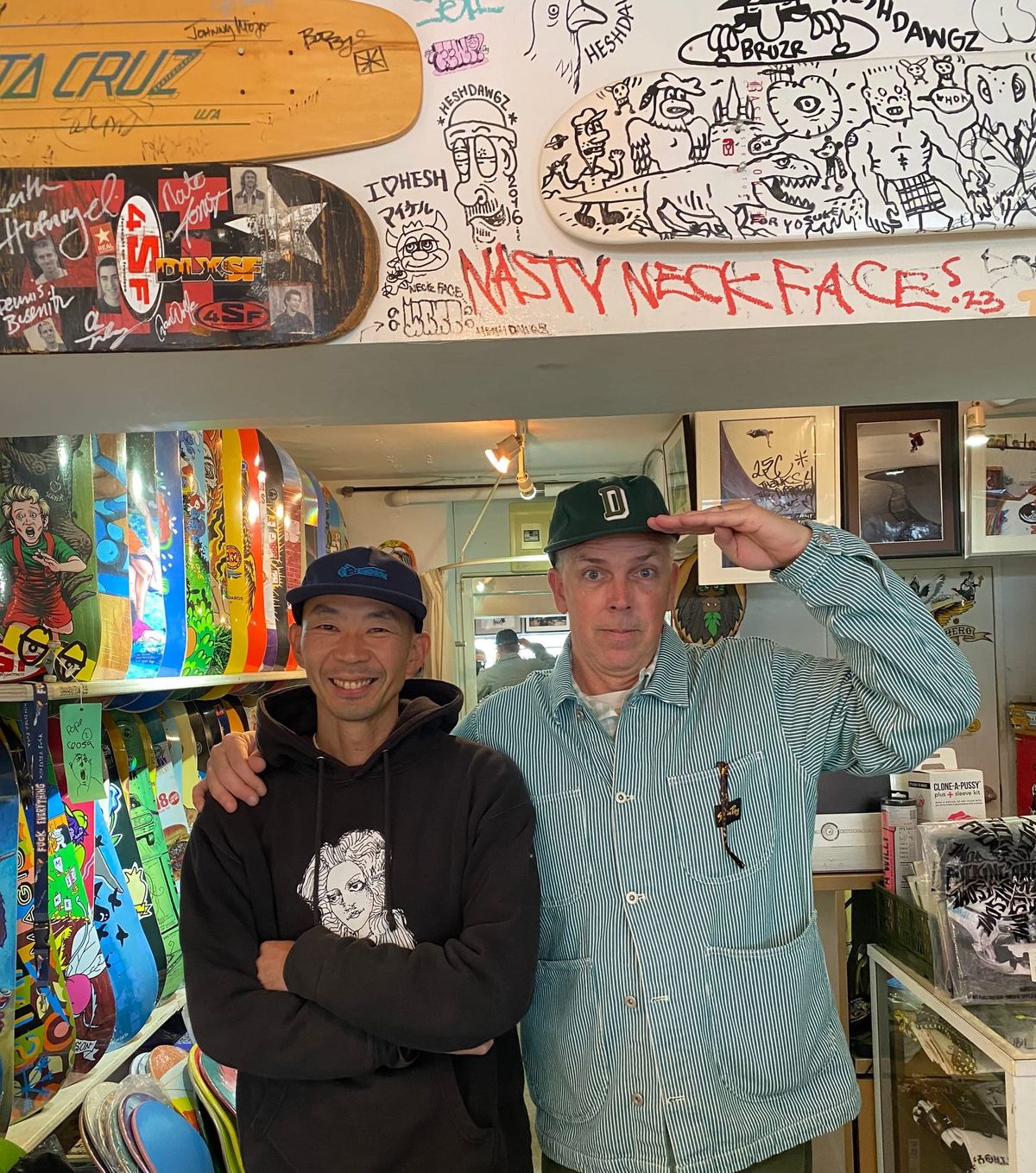
HESHDAWGZ is a particularly interesting example because its connection to American skateboarding is impossible to hide and pointless to deny. Yosuke “CB” Ishii spent formative time in San Francisco and started 4SIGHT there in 1998. When HESHDAWGZ opened in Harajuku in 2005, San Francisco was part of its DNA.
Looking backward, it is tempting to turn places like HESHDAWGZ into the result of some carefully considered cultural project: take San Francisco skateboarding, filter it through Tokyo, add Japanese design sensibility, and produce something new.
HESHDAWGZは、その点で特に興味深い存在だ。アメリカのスケートボードとのつながりは明白で、隠す必要も、否定する意味もない。石井洋介、通称「CB」は、サンフランシスコで自身の形成期ともいえる重要な時間を過ごし、1998年には現地で4SIGHTを立ち上げた。2005年に原宿でHESHDAWGZをオープンしたとき、サンフランシスコはすでにそのDNAの一部だった。
今になって振り返ると、HESHDAWGZのような場所を、綿密に計画された文化的プロジェクトの成果として捉えたくなる。サンフランシスコのスケートボードを東京というフィルターに通し、日本的なデザイン感覚を加え、新しいものを生み出す。そんな構図だ。
Ishii himself complicates that interpretation. Asked about the thinking behind HESHDAWGZ, he did not describe some grand plan to reinterpret American skate culture for Japan. His answer was considerably more pragmatic: much of the time, he was trying to make sure the shop didn’t go out of business. For those who know him, that’s a story in itself.
しかし、石井自身の言葉は、その解釈を少し複雑にする。
HESHDAWGZの背景にある考えを尋ねたとき、彼が語ったのは、アメリカのスケートカルチャーを日本向けに再解釈するという壮大な計画ではなかった。答えはもっと現実的なものだった。多くの時間、彼が考えていたのは、どうすれば店を潰さずに済むかということだった。
彼を知る人にとっては、それだけでもひとつの物語だろう。
Cultures are not always transformed because somebody decides to transform them. Sometimes transformation is simply what remains after years of people choosing what they like, discarding what they don’t, adapting to circumstances, making things, selling things, filming their friends, keeping a shop open and showing up again the next morning.
文化は、誰かが変えようと決意したからといって、必ずしも変わるわけではない。
時には、好きなものを選び、そうでないものを手放し、状況に合わせて工夫し、ものを作り、売り、仲間を撮影し、店を開け続け、翌朝またそこに戻ってくる。そんな日々を何年も重ねた末に残ったものこそが、変化そのものなのかもしれない。
Twenty years later, what looks deliberate from the outside may simply be the accumulated evidence of survival. And somewhere in that accumulation, translation has taken place. The source is still legible. San Francisco is still there. California is still there. The history of American skateboarding is still there. But HESHDAWGZ could not simply be picked up from Harajuku and dropped onto a street in San Francisco without becoming something else. Something transcending the point of origin. It’s a thought worth sitting for.
20年が経った今、外から見れば意図的に作り上げられたように映るものも、実際には生き残るために積み重ねてきた日々の証なのかもしれない。
そして、その積み重ねのどこかで、翻訳が起きていた。
原点は今も読み取れる。サンフランシスコはそこにある。カリフォルニアもある。アメリカのスケートボードの歴史も、確かにそこにある。
けれど、HESHDAWGZを原宿からそのまま持ち上げ、サンフランシスコの街角に置いたとしても、同じものにはならないだろう。
それは、出発点を越えて変化してきた何かなのだ。
少し立ち止まって考えてみたくなる。
Perhaps that is where the imitation argument finally falls apart. Imitation asks whether the copy resembles the original. Translation asks a much better question: What happened to the meaning along the way?
おそらく、そこにこそ「模倣」という考え方の限界がある。
模倣が問うのは、コピーがオリジナルにどれだけ似ているかということだ。
翻訳は、もっと興味深い問いを投げかける。
その道のりで、意味はどう変わったのか。
F・ル・モー