![Carte Blanche [Skateboarding]](https://storage.ghost.io/c/e8/66/e866238d-c304-4142-8930-e488e4890869/content/images/2026/08/Carte-Blanche---Skateboar-4.png)
Skate Shoe, Stripped Bare
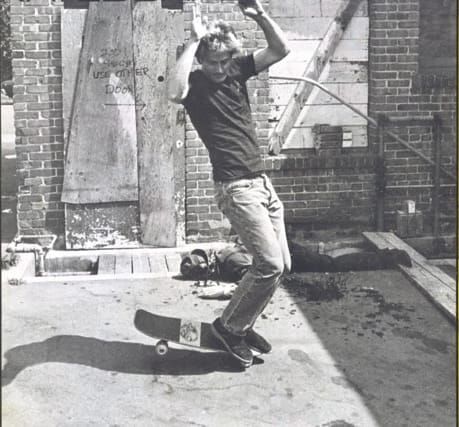
Skate shoes used to announce themselves. Suede. Vulcanized rubber. Reinforced ollie panels. The architecture was legible, the purpose built in.
Then came the transgressions.
Almost aggressively invisible, the Wino slipped in. No armour, little bulk, barely a concession to the violence awaiting it. On the right feet, however, none of this seemed to matter. The Wino looked entirely at home on a skateboard.
Which raises an awkward question: how little skate shoe can a skate shoe contain?
If you believe social media, apparently none. Some wore work boots, some high heels; plenty preferred bare feet. A skateboard is remarkably indifferent to what sits above it. Skateboarding is less so.
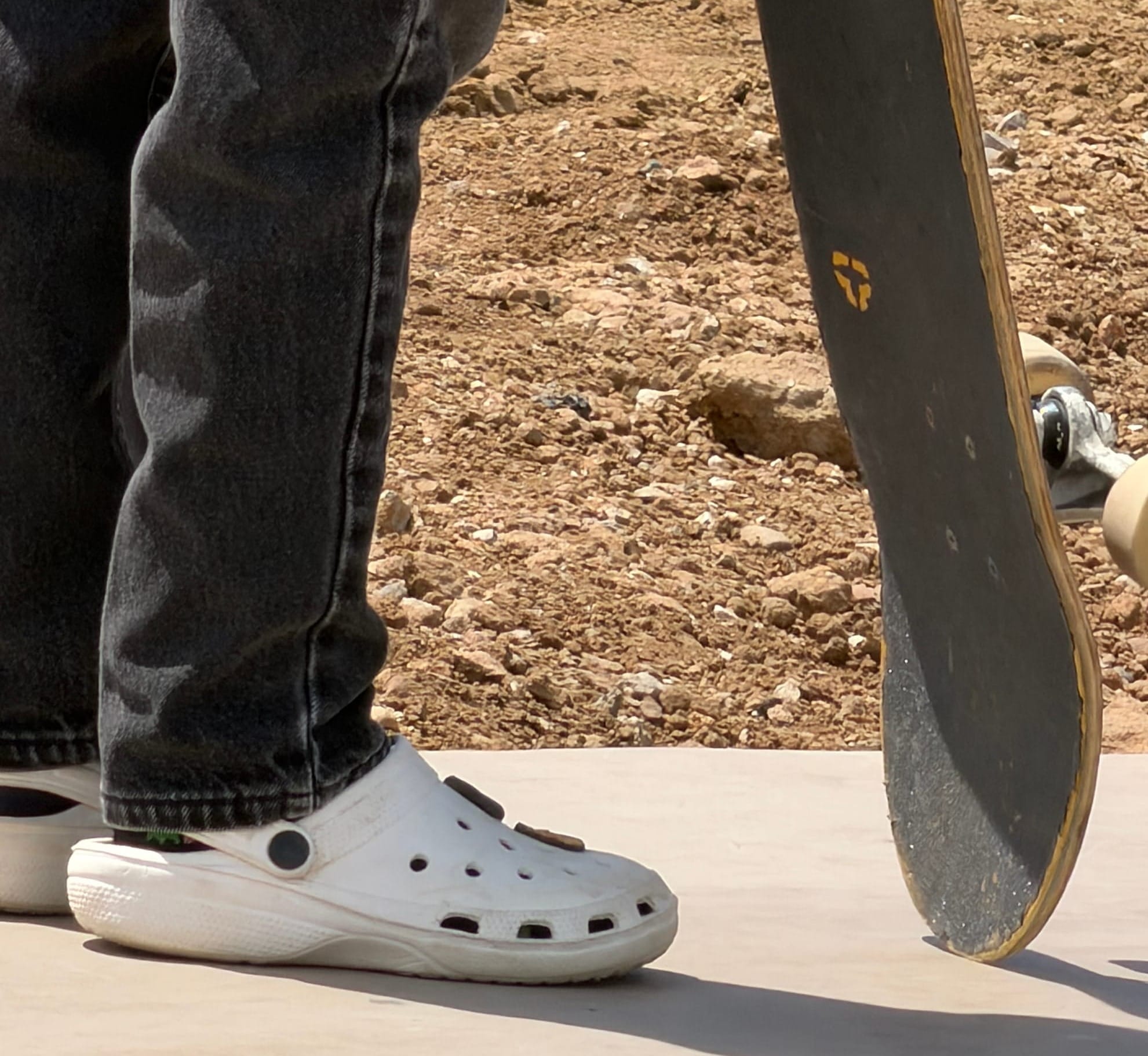
The Croc is an ingenious object. Cheap, washable, ventilated, comfortable and instantly recognisable, its moulded foam body is a small triumph of industrial design. It is also a shoe so aesthetically defeated that The Dictator called it “the universe’s symbol of a man who’s given up hope.” Idiocracy, meanwhile, put Crocs on the feet of its future inhabitants because they looked suitably ridiculous.
The distinction is useful. A Wino can become a skate shoe because it strips the category down without quite leaving it. A Croc, however competently kickflipped, remains a Croc: an ugly piece of foam with no character.
In an era when the skate shoe no longer defines itself by design alone, that boundary has become harder to see.
But it still exists.
And use alone doesn’t erase it.